Ivermectin for Perioral Dermatitis — Anti‑Inflammatory & Anti‑Demodex Therapy

Ivermectin for Perioral Dermatitis — Mechanism, Benefits & Where to Buy

Perioral dermatitis is an inflammatory dermatosis that appears around the mouth, nose, or eyes, presenting as clusters of small red papules, dryness, burning, and heightened skin sensitivity. Although it may resemble acne or rosacea, it is considered a distinct condition often triggered by topical steroids, irritants, or microbial imbalance. Topical ivermectin plays a meaningful role in management due to its combined anti‑inflammatory and anti‑Demodex activity, helping reduce irritation and restore skin balance with minimal systemic exposure.

Ivermectin is available in several topical forms — 1% cream, lotion, and gel — each offering different textures and absorption profiles. This guide explains how ivermectin compares with other perioral dermatitis therapies such as metronidazole, and what to consider before deciding where to buy topical ivermectin safely. Explore related sections: Ivermectin topical, Ivermectin for rosacea, Ivermectin for Demodex.

What Is Perioral Dermatitis?
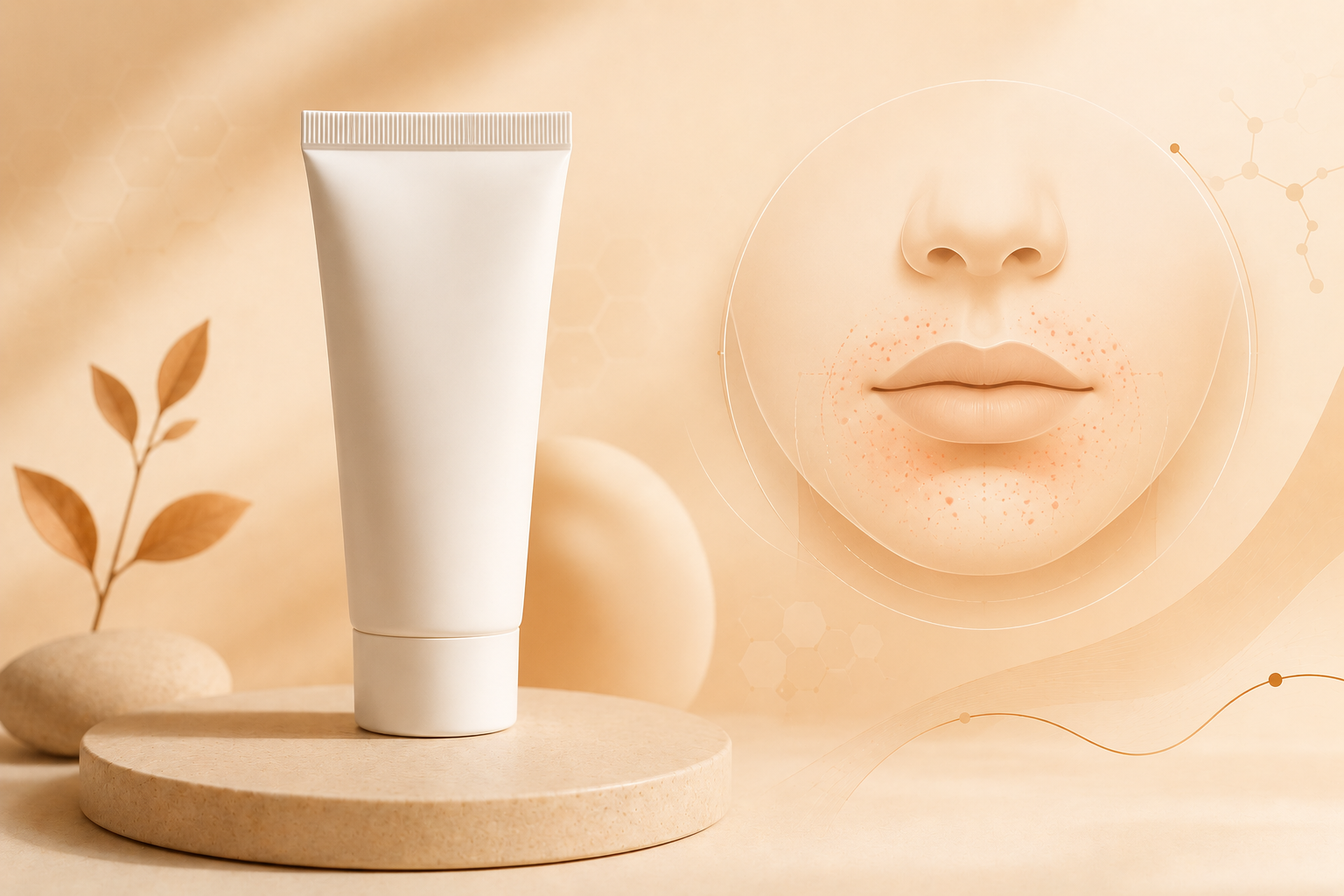
Perioral dermatitis is a chronic inflammatory facial dermatosis characterized by clusters of small papules and pustules around the mouth, nose, and sometimes the eyes. Although its exact cause is multifactorial, it is strongly associated with barrier disruption, inflammatory triggers, and, in some patients, increased Demodex activity. Because symptoms overlap with rosacea and acne, accurate differentiation is essential for selecting the right therapy.

Definition

Perioral dermatitis presents as erythematous papules, micro‑papules, and occasional pustules on an erythematous base. The skin often appears irritated, tight, or burning. A hallmark feature is the perioral distribution with a narrow zone of sparing immediately adjacent to the vermilion border.

Clinical Presentation

  • clusters of small papules and pustules
  • erythema, dryness, and scaling
  • burning or stinging sensations
  • symmetrical distribution around the mouth, nose, or eyes

Role of Inflammation

Inflammation is central to perioral dermatitis. Barrier impairment, irritants, and immune activation contribute to persistent redness and papules. Topical steroids, heavy cosmetics, and occlusive skincare often worsen inflammation and prolong flares.

Possible Link to Demodex

In some patients, increased density of Demodex folliculorum may contribute to follicular irritation and inflammatory papules. This explains why anti‑Demodex therapies such as ivermectin can be effective in steroid‑induced or rosacea‑like perioral dermatitis.

Difference from Rosacea and Acne

Rosacea typically involves persistent central‑facial erythema, flushing, and sensitivity. Acne features comedones, nodules, and deeper inflammatory lesions. Perioral dermatitis lacks comedones, is more superficial, and has a characteristic perioral distribution.

Perioral Dermatitis — Key Characteristics

Parameter Description
Distribution Perioral, perinasal, periocular; vermilion border sparing
Lesions Small papules, micro‑papules, occasional pustules
Inflammation Burning, erythema, sensitivity
Demodex link Possible role in papules and irritation
Difference from rosacea/acne No comedones; distinct perioral pattern

Why Ivermectin Is Used for Perioral Dermatitis

Ivermectin is increasingly recognized as an effective option for inflammatory and Demodex‑associated perioral dermatitis, thanks to its combined anti‑inflammatory, anti‑Demodex, and barrier‑supportive actions. These mechanisms address the core drivers of the condition, especially in cases triggered or worsened by topical steroids, irritants, or microbial imbalance. Mechanistic details are discussed in Ivermectin MOA.

Anti‑Inflammatory Effect

Ivermectin suppresses inflammatory cytokines such as IL‑8 and TLR‑2–mediated pathways. This reduces erythema, burning, and papular inflammation—key symptoms in perioral dermatitis. Its gentle anti‑inflammatory profile makes it suitable for sensitive or barrier‑impaired skin.

Reduction of Demodex Density

In patients with elevated Demodex folliculorum density, ivermectin directly reduces mite populations, decreasing follicular irritation and inflammatory papules. This is especially relevant in steroid‑induced or rosacea‑like perioral dermatitis, where Demodex overgrowth is more common.

Improvement of Skin Barrier Function

By lowering inflammation and reducing follicular stress, ivermectin supports barrier recovery. Patients often report smoother skin, reduced sensitivity, and improved tolerance to skincare products.

When Ivermectin Is Considered

  • steroid‑induced perioral dermatitis
  • rosacea‑like perioral dermatitis with burning and erythema
  • suspected Demodex involvement (papules without comedones)
  • patients intolerant to irritating agents like azelaic acid

Mechanism of Action of Ivermectin in Perioral Dermatitis

Ivermectin improves perioral dermatitis through a combination of anti‑parasitic, anti‑inflammatory, and barrier‑modulating effects. These mechanisms make it particularly effective in cases with Demodex involvement or heightened inflammatory sensitivity.

Action on Demodex folliculorum

Ivermectin binds to glutamate‑gated chloride channels in Demodex mites, increasing chloride influx and causing paralysis. This leads to rapid mite death, reducing follicular irritation and antigen release.

Reduction of Inflammatory Cytokines

Ivermectin suppresses IL‑8, TNF‑α, and TLR‑2 pathways, decreasing erythema, burning, and papular inflammation. This dual anti‑mite and anti‑inflammatory action is especially valuable in steroid‑induced or rosacea‑like perioral dermatitis.

Reduction of Papulopustular Elements

By targeting both mites and inflammation, ivermectin reduces papules, micro‑papules, and pustules more gently than keratolytic agents. Improvements typically appear within 2–4 weeks.

Topical vs Oral Ivermectin

Topical ivermectin acts locally within follicles and sebaceous glands, minimizing systemic exposure and maximizing anti‑Demodex activity. Oral ivermectin distributes systemically and is reserved for severe or refractory cases, but lacks the targeted, sustained follicular action of topical formulations.

MOA of Ivermectin in Perioral Dermatitis — Key Elements

Mechanism Description
Demodex action Kills mites via glutamate‑gated chloride channel binding
Cytokine reduction Decreases IL‑8, TNF‑α, TLR‑2 activation
Papule reduction Improves papules, micro‑papules, and erythema
Topical vs oral Local follicular action vs systemic distribution

Topical Forms of Ivermectin for Perioral Dermatitis

Ivermectin is available in three topical formulations—ivermectin cream 1%, ivermectin lotion, and ivermectin gel. Although all contain the same active ingredient, their vehicles differ significantly, influencing tolerability, cosmetic feel, and suitability for different skin types. In perioral dermatitis—where the skin is often sensitive, irritated, and barrier‑impaired—the correct formulation can meaningfully affect comfort and treatment adherence.

Ivermectin Cream 1%

The cream is the standard and most widely used formulation. Its rich, emollient texture supports the skin barrier, reduces irritation, and provides a soothing effect—important for patients with burning, dryness, or steroid‑induced perioral dermatitis. Cream is especially effective when barrier repair is a priority.

Ivermectin Lotion

The lotion offers a light, fluid texture that absorbs quickly and provides balanced hydration. It is ideal for normal or combination skin, where a non‑occlusive yet moisturizing vehicle is preferred. Lotion spreads easily and works well under sunscreen or makeup, making it suitable for daily use.

Ivermectin Gel

The gel features a matte, fast‑drying, non‑greasy texture, making it the best choice for oily or sebaceous skin, or for patients who dislike heavier formulations. It reduces shine and avoids pore congestion, which is useful in perioral dermatitis with acne‑like features or Demodex involvement.

Cream vs Lotion vs Gel — Comparison

Form Texture Skin type Clinical notes
Cream 1% Rich, emollient Dry, sensitive Best for barrier repair; high tolerability
Lotion Light, fluid Normal, combination Balanced hydration; daily comfort
Gel Matte, fast‑drying Oily, sebaceous Ideal for Demodex‑associated forms; reduces shine

The Role of Demodex in Perioral Dermatitis

Although perioral dermatitis is primarily an inflammatory condition linked to barrier disruption and irritants, Demodex mites may contribute to inflammation in a subset of patients. This is especially true in steroid‑induced or rosacea‑like presentations, where mite density is often elevated. More details are available at Ivermectin for demodex.

Possible Link Between Demodex and Inflammation

Demodex mites can trigger inflammation through:

  • mechanical irritation of follicles
  • release of bacterial antigens from mite microbiota
  • activation of TLR‑2 and inflammatory cytokines

This can worsen erythema, burning, and papular eruptions—symptoms commonly seen in perioral dermatitis.

When Demodex‑Associated Form Is Likely

  • papules without comedones
  • burning or stinging rather than deep nodules
  • symmetrical distribution around the mouth or nose
  • worsening after topical steroids
  • coexisting rosacea‑like redness

Why Ivermectin Is Effective

Ivermectin kills Demodex folliculorum and reduces inflammatory cytokines, addressing both the parasitic and inflammatory components of the disease. This dual action explains its strong performance in steroid‑induced, rosacea‑like, and Demodex‑associated perioral dermatitis.

Demodex‑Associated Perioral Dermatitis — Key Features

Feature Description
Comedones Absent; distinguishes from acne
Inflammation Strong inflammatory response to mites
Distribution Perioral, perinasal; often symmetrical
Response to ivermectin Rapid improvement due to anti‑Demodex action

Efficacy of Ivermectin in Perioral Dermatitis

Ivermectin demonstrates strong clinical benefit in inflammatory and Demodex‑associated perioral dermatitis, supported by observational studies, mechanistic data, and real‑world dermatology practice. Its dual action—anti‑inflammatory and anti‑Demodex—addresses the core drivers of the condition, especially in steroid‑induced or rosacea‑like presentations.

Clinical Study Data

Studies evaluating ivermectin in rosacea, acne‑like eruptions, and perioral dermatitis show significant reductions in inflammatory lesions, improved skin comfort, and better patient satisfaction compared with baseline. Although perioral dermatitis–specific trials are limited, evidence from related inflammatory dermatoses strongly supports its use.

Reduction of Inflammatory Lesions

Ivermectin reduces papules, micro‑papules, erythema, and burning, especially in patients with Demodex involvement or steroid‑induced flares. Improvements typically appear within 2–4 weeks, with continued gains over 8–12 weeks.

Improvement of Skin Texture

By lowering inflammation and reducing follicular irritation, ivermectin helps smooth the skin surface, reduce roughness, and improve overall texture. Patients often report less burning and improved tolerance to skincare products.

Duration of Effect

Ivermectin provides long‑lasting remission, especially when Demodex is a contributing factor. Relapse rates are lower than with metronidazole in Demodex‑positive patients, and maintenance therapy is generally well tolerated.

Efficacy of Ivermectin in Perioral Dermatitis — Study Overview

Parameter Findings Clinical relevance
Inflammatory lesion reduction Strong decrease in papules/micro‑papules Ideal for inflammatory & Demodex‑associated forms
Texture improvement Smoother skin, reduced roughness Better tolerance vs keratolytics
Redness reduction Moderate–strong improvement Useful for rosacea‑like presentations
Long‑term effect Low relapse rates Suitable for chronic management

Ivermectin vs Metronidazole

Ivermectin and metronidazole are both used for inflammatory facial dermatoses, but their roles differ significantly in perioral dermatitis, especially when Demodex or steroid‑induced inflammation is involved. A detailed comparison is available at Ivermectin vs Metronidazole.

Comparison of Mechanisms

Ivermectin combines anti‑Demodex activity with suppression of inflammatory cytokines (IL‑8, TLR‑2). Metronidazole reduces oxidative stress and neutrophil activity but has no anti‑Demodex effect. This makes ivermectin more effective when mite overgrowth or rosacea‑like inflammation is present.

Tolerability

Ivermectin is generally better tolerated, causing minimal dryness or burning. Metronidazole is also well tolerated but may cause mild irritation, especially in alcohol‑based gel formulations.

Clinical Data

Studies in rosacea and acne‑like dermatoses show that ivermectin achieves greater lesion reduction and higher patient satisfaction compared with metronidazole. In perioral dermatitis, ivermectin often outperforms metronidazole in steroid‑induced or Demodex‑associated cases.

Speed of Action

Ivermectin typically produces visible improvement within 2–4 weeks, while metronidazole often requires 6–8 weeks for comparable results. The faster response is attributed to ivermectin’s direct anti‑mite effect.

Ivermectin vs Metronidazole — Comparative Characteristics

Parameter Ivermectin Metronidazole
Mechanism Anti‑Demodex + anti‑inflammatory Anti‑inflammatory only
Tolerability Excellent Good; occasional dryness
Clinical data Superior lesion reduction Effective for mild inflammatory cases
Speed of action Fast (2–4 weeks) Moderate (6–8 weeks)

Ivermectin vs Azelaic Acid

Ivermectin and azelaic acid are both used in inflammatory facial dermatoses, including perioral dermatitis, but they differ significantly in mechanism, tolerability, and clinical relevance for Demodex‑associated forms. A detailed comparison is available at Ivermectin vs Azelaic acid.

Efficacy

Ivermectin provides strong improvement in papules, micro‑papules, erythema, and burning, especially when Demodex density is elevated or when the condition resembles rosacea. Azelaic acid offers moderate improvement in inflammatory lesions and pigmentation but lacks anti‑Demodex activity, making it less effective in mite‑driven perioral dermatitis.

Tolerability

Ivermectin is generally better tolerated, causing minimal burning or dryness. Azelaic acid (15–20%) frequently causes tingling, stinging, and irritation, especially in sensitive or steroid‑damaged skin.

Skin Type

Ivermectin suits all skin types, with cream for dry/sensitive skin and gel for oily skin. Azelaic acid is best for normal to oily skin, but may be too irritating for reactive or barrier‑impaired skin.

Demodex‑Associated Forms

Ivermectin directly reduces Demodex folliculorum density, making it the preferred option for rosacea‑like or steroid‑induced perioral dermatitis. Azelaic acid does not affect mites and is less effective in Demodex‑driven inflammation.

Ivermectin vs Azelaic Acid — Comparison

Parameter Ivermectin Azelaic Acid
Efficacy High; strong anti‑inflammatory + anti‑Demodex Moderate; no anti‑mite effect
Tolerability Excellent Variable; often irritating
Skin type All types (cream/gel options) Normal–oily
Demodex activity Strong None

Ivermectin vs Pimecrolimus

Ivermectin and pimecrolimus are both used in perioral dermatitis, but they differ fundamentally in mechanism, clinical scenarios, and patient suitability. Pimecrolimus is an immunomodulator, while ivermectin combines anti‑Demodex and anti‑inflammatory effects, making it particularly effective in rosacea‑like or steroid‑induced forms.

Comparison of Mechanisms

Ivermectin targets Demodex mites and suppresses inflammatory cytokines (IL‑8, TLR‑2). Pimecrolimus inhibits calcineurin, reducing T‑cell activation and inflammation. It does not affect Demodex mites.

Tolerability

Ivermectin is generally well tolerated, with minimal burning or dryness. Pimecrolimus may cause transient burning or warmth after application, especially in sensitive skin, but is still considered safe for long‑term use.

Clinical Scenarios

  • Ivermectin — preferred for Demodex‑associated, rosacea‑like, or steroid‑induced perioral dermatitis.
  • Pimecrolimus — useful for classic inflammatory perioral dermatitis, especially when barrier impairment is significant or when patients cannot tolerate keratolytics.

Ivermectin vs Pimecrolimus — Comparative Characteristics

Parameter Ivermectin Pimecrolimus
Mechanism Anti‑Demodex + anti‑inflammatory Calcineurin inhibition (anti‑inflammatory)
Tolerability Excellent Good; possible burning
Clinical use Demodex‑associated, rosacea‑like forms Classic inflammatory perioral dermatitis
Demodex activity Yes No

Safety and Tolerability of Ivermectin in Perioral Dermatitis

Ivermectin is considered one of the most well‑tolerated topical treatments for inflammatory and Demodex‑associated perioral dermatitis. Its localized action within the epidermis and follicles minimizes irritation while providing strong anti‑inflammatory and anti‑mite effects. A broader overview of ivermectin’s safety profile is available at Ivermectin general safety.

Local Reactions

Most adverse effects are mild, transient, and self‑limiting. Common reactions include slight dryness, mild burning or stinging immediately after application, temporary erythema, or increased sensitivity during the first days of therapy. Compared with azelaic acid or pimecrolimus, ivermectin causes significantly less irritation and is generally better tolerated by sensitive or steroid‑damaged skin.

Absence of Systemic Effects

Topical ivermectin demonstrates minimal systemic absorption, with plasma levels far below those associated with oral ivermectin. Because it does not meaningfully enter systemic circulation, systemic side effects such as dizziness, neurologic symptoms, or drug–drug interactions are not expected.

Difference from Oral Safety

Oral ivermectin undergoes hepatic metabolism and interacts with CYP3A4 and P‑gp pathways, which may lead to systemic adverse effects. Topical ivermectin avoids these mechanisms entirely, making it a safer option for long‑term dermatologic use in chronic or recurrent perioral dermatitis.

Side Effects of Ivermectin in Perioral Dermatitis — Overview

Side effect Description Clinical relevance
Dryness Mild, transient dryness Less than with azelaic acid
Burning/stinging Short‑lasting irritation Common early; improves quickly
Erythema Temporary redness Resolves as inflammation decreases
Systemic effects None clinically significant Minimal systemic absorption

Drug Interactions of Ivermectin in Perioral Dermatitis

Topical ivermectin has an extremely low interaction risk because it remains localized within the epidermis and hair follicles, with only trace amounts entering systemic circulation. This sharply contrasts with oral ivermectin, which distributes systemically and interacts with metabolic pathways. A detailed comparison of systemic interaction risks is available at Ivermectin oral interactions.

Minimal Systemic Absorption → Almost No Interactions

Because topical ivermectin reaches only negligible plasma concentrations, it does not meaningfully interact with CYP3A4 substrates, P‑glycoprotein modulators, anticoagulants, immunosuppressants, or cardiovascular medications. This makes it safe for patients taking multiple systemic drugs.

Difference from Oral Ivermectin

Oral ivermectin undergoes hepatic metabolism and may interact with CYP3A4 and P‑gp pathways, creating potential drug–drug interactions. Topical ivermectin avoids these pathways entirely, making it a preferred option for long‑term management of perioral dermatitis, especially when Demodex involvement is suspected.

Price and Commercial Information

The cost of ivermectin for perioral dermatitis varies depending on formulation—cream, lotion, or gel—and whether the product is generic or branded (Soolantra). Broader pricing information is available at Ivermectin price and Soolantra price.

Price of Generic Ivermectin (Cream, Lotion, Gel)

Generic ivermectin formulations are generally affordable, with cream typically being the lowest‑priced option due to wide availability. Lotion and gel may cost slightly more depending on manufacturer and region. Gel is often positioned as a premium option for oily or Demodex‑prone skin because of its matte, fast‑absorbing texture.

Price of Soolantra

Soolantra (ivermectin 1% cream) is the highest‑priced formulation due to its proprietary vehicle, premium brand positioning, and extensive clinical trial program. Many patients prefer Soolantra for its superior cosmetic elegance and barrier‑supportive properties, especially in rosacea‑like or steroid‑induced perioral dermatitis.

Comparison with Alternatives

Compared with metronidazole, azelaic acid, and pimecrolimus, ivermectin is usually moderately priced while offering superior efficacy in Demodex‑associated or rosacea‑like perioral dermatitis. Generic ivermectin provides a cost‑effective alternative to Soolantra with comparable anti‑mite performance.

Price Ranges of Ivermectin for Perioral Dermatitis — Overview

Product Price range Notes
Generic ivermectin cream Low–moderate Most affordable; strong tolerability
Generic ivermectin lotion Moderate Light texture; suitable for combination skin
Generic ivermectin gel Moderate–moderately high Matte finish; ideal for oily skin
Soolantra High Premium brand; proprietary vehicle; extensive clinical data

Ivermectin for Perioral Dermatitis – Frequently Asked Questions

Perioral dermatitis is an inflammatory skin condition that appears around the mouth, nose, or eyes. It typically presents as clusters of small red papules, dryness, burning, and heightened sensitivity. Although it may resemble acne or rosacea, it is a distinct dermatologic disorder often triggered by topical steroids, irritants, or microbial imbalance. Management focuses on calming inflammation, restoring the skin barrier, and avoiding known triggers.

Ivermectin helps manage perioral dermatitis through its anti-inflammatory and anti-Demodex effects. It reduces inflammatory papules and calms irritation while lowering the density of Demodex mites, which may contribute to flare-ups in some individuals. Because ivermectin acts locally with minimal systemic absorption, it is often included in topical regimens for inflammatory perioral dermatitis presentations.

In some individuals, Demodex folliculorum or Demodex brevis may contribute to perioral dermatitis by triggering inflammation and disrupting the skin barrier. While not all cases are Demodex-related, mite overgrowth can worsen redness, papules, and sensitivity. Ivermectin’s anti-Demodex action makes it a useful option when mite involvement is suspected or when symptoms resemble Demodex-associated irritation.

Ivermectin for perioral dermatitis is available in several topical forms, including 1% cream, lotion, and gel. These formulations differ in texture and absorption but provide similar anti-inflammatory and anti-Demodex benefits. Cream is richer and suited for dry or sensitive skin, lotion offers balanced spreadability, and gel provides a lightweight, fast-absorbing finish ideal for oily or combination skin.

Ivermectin cream has a thicker, more emollient texture and is often preferred for dry or irritated skin. Ivermectin gel is lighter, absorbs faster, and may be better suited for oily or combination skin. Both contain the same active ingredient and provide similar anti-inflammatory and anti-Demodex benefits. The choice depends on skin type, texture preference, and comfort during daily use.

Perioral dermatitis differs from acne and rosacea in both appearance and underlying mechanisms. Acne involves clogged pores and bacterial activity, while rosacea is a chronic inflammatory condition often linked to vascular sensitivity and Demodex. Perioral dermatitis presents as small papules around the mouth with dryness and irritation, often triggered by topical steroids or irritants. Although symptoms may overlap, treatment strategies differ significantly.

Improvement with topical ivermectin typically appears gradually over several weeks. Redness, papules, and irritation often decrease as inflammation is reduced and Demodex activity declines. Consistent daily use is important for optimal results, and improvements may continue over several months. Many users notice clearer, calmer skin with ongoing application as part of a stable perioral dermatitis routine.

Topical ivermectin is generally well‑tolerated for long‑term use due to its minimal systemic absorption. It is often used for chronic inflammatory or Demodex-associated perioral dermatitis symptoms. Long‑term safety depends on individual skin sensitivity and consistent application. Because ivermectin acts locally, it carries a low risk of systemic interactions compared with oral medications commonly used for inflammatory skin conditions.

Mild irritation, dryness, or temporary redness may occur when starting topical ivermectin, particularly in sensitive skin. These effects often decrease as the skin adjusts. Using gentle moisturizers and avoiding harsh skincare products may help reduce discomfort during the initial adjustment period. Most users tolerate ivermectin well once their skin adapts to regular application.

Soolantra is a branded 1% ivermectin cream commonly used for inflammatory and Demodex-associated skin conditions. Generic ivermectin creams, gels, and lotions contain the same active ingredient but may differ in texture and excipients. Both provide similar anti-inflammatory and anti-Demodex benefits. The choice often depends on formulation preference, availability, and how the product feels on the skin during daily use.

Ivermectin and metronidazole are both used for inflammatory skin conditions but work differently. Ivermectin provides anti-inflammatory and anti-Demodex effects, while metronidazole primarily targets inflammation and microbial imbalance. Some individuals respond better to ivermectin, especially when mite overgrowth is suspected, while others benefit from metronidazole’s anti-inflammatory profile. Both are widely used in dermatology depending on symptom patterns and skin sensitivity.

Ivermectin is sometimes used alongside other perioral dermatitis treatments such as metronidazole, azelaic acid, or sulfur-based products. Because ivermectin has minimal systemic absorption, interaction risks are low. However, combining multiple active ingredients may increase irritation in sensitive skin. Many routines space out applications or alternate products depending on skin tolerance and treatment goals.

Yes, topical steroid use is one of the most common triggers of perioral dermatitis. Steroids can temporarily reduce redness but may disrupt the skin barrier and worsen inflammation over time, leading to persistent papules and irritation. When steroid-induced perioral dermatitis occurs, treatment focuses on calming inflammation and restoring the skin barrier with non-steroidal topical therapies such as ivermectin.

More information is available in related sections covering ivermectin topical formulations, ivermectin for rosacea, and ivermectin for Demodex. These resources provide detailed insights into formulation differences, application patterns, and dermatologic considerations. Reviewing these materials helps users understand how ivermectin fits into broader perioral dermatitis management strategies and long-term skin care planning.