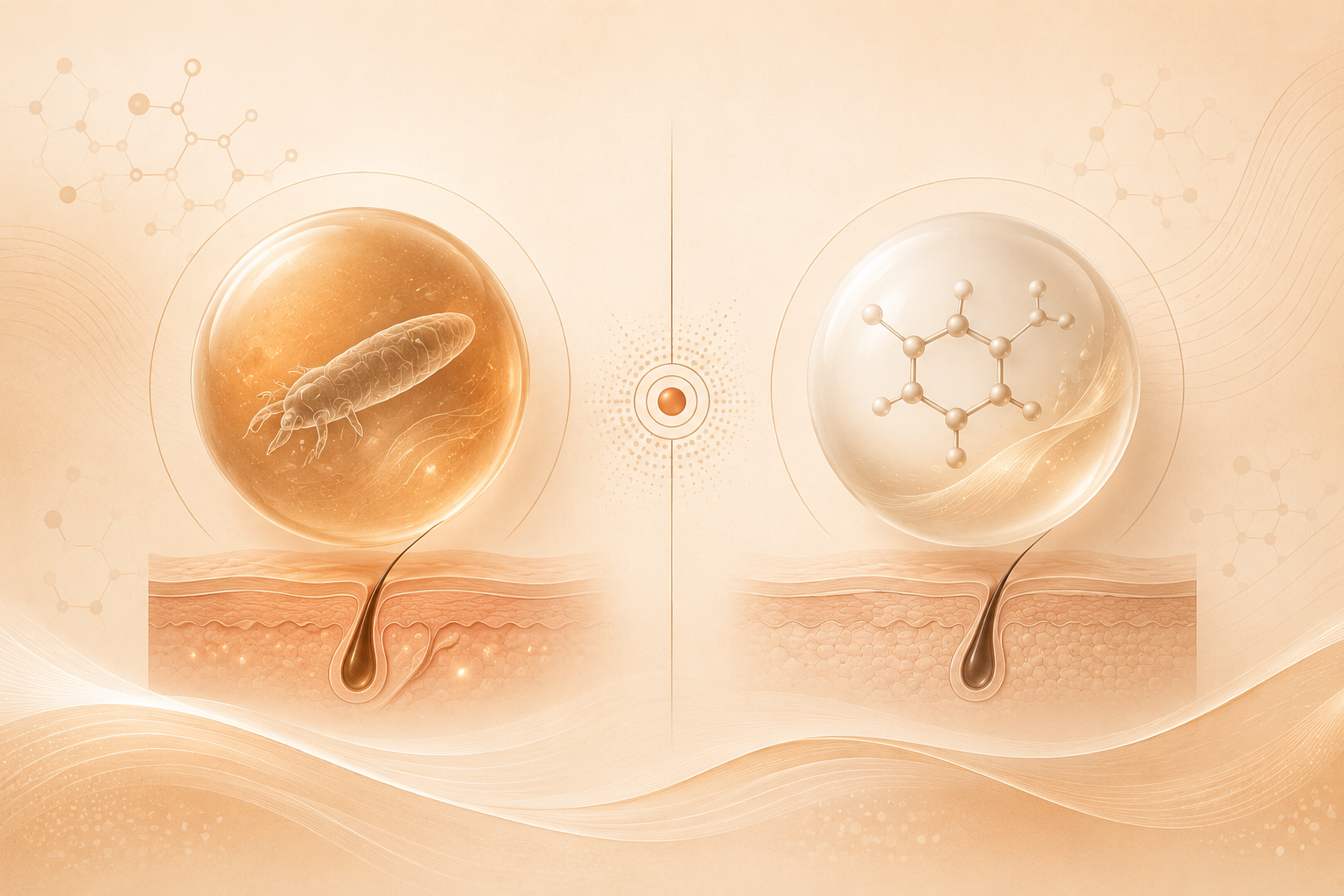
Ivermectin and azelaic acid are two of the most widely used topical therapies for inflammatory rosacea, each offering distinct advantages depending on the patient’s symptom profile and skin sensitivity. Ivermectin provides a dual anti‑Demodex and anti‑inflammatory effect, making it particularly effective for papulopustular rosacea associated with mite overgrowth. Azelaic acid, by contrast, delivers anti‑inflammatory and keratolytic activity, helping reduce redness, improve texture, and support skin turnover in patients with persistent erythema and uneven tone.
Differences between the two include mechanism of action, tolerability, speed of improvement, and strength of clinical evidence in Demodex‑driven inflammation. Ivermectin often provides smoother tolerability and faster lesion reduction, while azelaic acid remains a versatile option for patients seeking additional keratolytic benefits. This comparison page clarifies where each treatment fits within modern rosacea management. Explore related resources: Ivermectin topical, Ivermectin for rosacea, Ivermectin vs Azelaic acid.
Ivermectin 1% cream and azelaic acid 15–20% are two of the most widely used topical treatments for inflammatory rosacea. Although both reduce redness and papulopustular lesions, they differ significantly in their active ingredients, formulation types, mechanisms of action, and clinical use cases. These differences shape their roles in rosacea management, especially when Demodex involvement or skin sensitivity is a concern.
Ivermectin is a macrocyclic lactone with potent anti‑Demodex and anti‑inflammatory activity. Azelaic acid is a dicarboxylic acid with keratolytic, anti‑inflammatory, and antimicrobial properties. Its higher concentration (15–20%) contributes to both efficacy and irritation potential.
Ivermectin provides a dual mechanism: • strong anti‑Demodex activity • suppression of inflammatory cytokines (IL‑8, TNF‑α, TLR‑2) Azelaic acid works through: • keratolytic exfoliation • anti‑inflammatory effects • antimicrobial action against Cutibacterium and other skin flora
| Parameter | Ivermectin 1% | Azelaic acid 15–20% |
|---|---|---|
| Active ingredient | Ivermectin 1% | Azelaic acid 15–20% |
| Mechanism | Anti‑Demodex + anti‑inflammatory | Keratolytic + anti‑inflammatory + antimicrobial |
| Formulations | Cream | Cream, gel, foam |
| Best clinical use | Demodex‑associated rosacea | Oily/combination rosacea with irritation tolerance |
The therapeutic divergence between ivermectin 1% cream and azelaic acid 15–20% begins with their fundamentally different mechanisms of action. Both agents reduce inflammation and improve rosacea symptoms, but ivermectin provides targeted anti‑Demodex activity, while azelaic acid focuses on keratinization, inflammation, and microbial balance. A detailed mechanistic overview is available at Ivermectin MOA.
Ivermectin binds to glutamate‑gated chloride channels in Demodex folliculorum, causing paralysis and death of mites. This makes it uniquely effective for Demodex‑associated rosacea. In addition, ivermectin suppresses inflammatory mediators such as IL‑8, TNF‑α, and TLR‑2, reducing both redness and inflammatory lesions.
Clinically, ivermectin provides:
Azelaic acid acts through multiple pathways:
Clinically, azelaic acid is associated with:
| MOA parameter | Ivermectin | Azelaic acid |
|---|---|---|
| Anti‑Demodex activity | Strong | Mild |
| Anti‑inflammatory effect | Strong | Moderate |
| Keratolytic effect | None | Present |
| Microbiome impact | Minimal | Moderate |
| Clinical impact | Strong papule/pustule reduction | Strong erythema reduction |
Both ivermectin 1% cream and azelaic acid 15–20% demonstrate minimal systemic absorption, making them safe for long‑term use. However, their distribution within the epidermis and the influence of formulation vehicles differ significantly. A detailed PK overview is available at Ivermectin PK.
Ivermectin and azelaic acid both remain primarily within the epidermis, with negligible plasma levels.
Ivermectin concentrates in the pilosebaceous units — the habitat of Demodex mites — enabling targeted action. Azelaic acid distributes more broadly across the stratum corneum and upper epidermis, aligning with its keratolytic and anti‑inflammatory roles.
Ivermectin uses a dermatology‑optimized cream base that enhances comfort and reduces irritation. Azelaic acid gels and foams penetrate quickly but may cause dryness or stinging due to higher acid concentration.
Neither topical ivermectin nor azelaic acid shares the systemic PK characteristics of their oral counterparts. Topical forms act locally without systemic therapeutic levels.
| PK parameter | Ivermectin | Azelaic acid |
|---|---|---|
| Systemic absorption | Minimal | Minimal |
| Epidermal distribution | Follicular‑targeted | Superficial epidermis |
| Vehicle influence | High (optimized cream) | Moderate (gel/foam variability) |
| Difference from oral PK | No systemic PK relevance | No systemic PK relevance |
Ivermectin 1% cream and azelaic acid 15–20% are both established treatments for inflammatory rosacea, but their clinical performance differs due to distinct mechanisms and dermatologic targets. Ivermectin demonstrates superior outcomes in papulopustular and Demodex‑associated rosacea, while azelaic acid is effective for erythema and mild inflammatory lesions, especially in oily or combination skin types.
Ivermectin for rosacea has been validated in multiple randomized controlled trials. Key findings include:
Ivermectin’s dual anti‑Demodex and anti‑inflammatory action makes it particularly effective for patients with recurrent inflammatory flares or high mite density.
Azelaic acid provides:
However, irritation (burning, stinging) is common, especially at 20% concentration, which may limit use in sensitive rosacea‑prone skin.
Ivermectin generally outperforms azelaic acid in papulopustular and Demodex‑associated rosacea, while azelaic acid remains valuable for erythema‑dominant cases and for patients with oilier skin who tolerate keratolytic agents well.
| Parameter | Ivermectin | Azelaic acid |
|---|---|---|
| Papule/pustule reduction | Strong | Moderate |
| Erythema improvement | Moderate | Strong |
| Demodex‑associated efficacy | High | Low–moderate |
| Clinical evidence | Extensive RCTs | Long‑term clinical use |
The onset of visible improvement is a key factor for rosacea patients, especially those experiencing frequent inflammatory flares. Ivermectin and azelaic acid differ significantly in how quickly they deliver clinical results.
Ivermectin typically produces a rapid reduction in papules and pustules, with many patients noticing improvement within 2–4 weeks. This fast response is driven by its potent anti‑Demodex activity and strong suppression of inflammatory cytokines.
Azelaic acid provides a slower, more gradual improvement, often requiring 6–8 weeks for noticeable changes. Its keratolytic and anti‑inflammatory effects accumulate over time, making it suitable for long‑term maintenance rather than rapid flare control.
| Parameter | Ivermectin | Azelaic acid |
|---|---|---|
| Onset of improvement | 2–4 weeks | 6–8 weeks |
| Best for flares | Yes | Moderate |
| Best for maintenance | Good | Excellent |
Ivermectin 1% cream and azelaic acid 15–20% differ substantially in tolerability due to their mechanisms, vehicle composition, and concentration. Ivermectin is formulated in a soft, dermatology‑optimized base designed for sensitive rosacea‑prone skin, while azelaic acid — especially at higher concentrations — is known for transient irritation, stinging, and erythema. A detailed overview of ivermectin’s safety is available at Ivermectin topical — side effects.
Ivermectin is recognized for its excellent tolerability profile. Its cream vehicle includes emollients and barrier‑supportive excipients, making it suitable even for highly reactive skin. Key tolerability advantages include:
These properties make ivermectin ideal for long‑term rosacea management and for patients with compromised skin barriers.
Azelaic acid is effective but more irritating, especially at 20% concentration. Common side effects include:
Despite these effects, azelaic acid remains valuable for patients with oily or combination skin who tolerate keratolytic agents well.
| Parameter | Ivermectin | Azelaic acid |
|---|---|---|
| Irritation risk | Very low | Moderate–high |
| Burning/stinging | Rare | Common |
| Erythema | Minimal | Possible |
| Barrier comfort | High | Low–moderate |
Although both ivermectin and azelaic acid are used for rosacea, their broader clinical applications differ due to their mechanisms of action. Ivermectin is particularly effective for Demodex‑associated conditions, while azelaic acid is useful for erythema‑dominant rosacea and acneiform presentations. Both agents are also used off‑label for acne and perioral dermatitis.
Ivermectin for rosacea is highly effective for papulopustular and Demodex‑associated rosacea. Azelaic acid is effective for erythema and mild inflammatory lesions, especially in oily or combination skin.
Ivermectin for Demodex is one of the strongest topical anti‑Demodex agents. Azelaic acid has limited anti‑Demodex activity and is not preferred for mite‑driven disease.
Ivermectin for acne may help in inflammatory acne with suspected Demodex involvement. Azelaic acid is effective for comedonal and inflammatory acne due to keratolytic and antimicrobial effects.
Ivermectin for perioral dermatitis is increasingly used due to its anti‑inflammatory and anti‑Demodex effects. Azelaic acid may help but can irritate sensitive POD‑prone skin.
| Indication | Ivermectin | Azelaic acid |
|---|---|---|
| Rosacea | Yes (strong for papulopustular) | Yes (strong for erythema) |
| Demodex infestation | Highly effective | Limited |
| Acne (off‑label) | Possible benefit | Effective |
| Perioral dermatitis (off‑label) | Effective | Possible but irritating |
This section provides a structured comparison of the three most widely used topical treatments for rosacea: ivermectin 1% cream, azelaic acid 15–20%, and metronidazole 0.75–1%. Although all three reduce inflammation and improve skin quality, they differ significantly in mechanism, tolerability, and suitability for specific rosacea phenotypes. A detailed comparison of ivermectin and metronidazole is available at Ivermectin vs Metronidazole.
| Parameter | Ivermectin | Azelaic acid | Metronidazole |
|---|---|---|---|
| Efficacy | Very high | Moderate–high | Moderate |
| Tolerability | Excellent | Low–moderate | High |
| Best for skin type | Sensitive / reactive | Oily / combination | Most skin types |
Cost varies significantly between ivermectin and azelaic acid due to differences in formulation complexity, brand positioning, and regulatory status. Ivermectin is available in both branded and generic forms, while azelaic acid spans a wide price range depending on concentration and cosmetic vs medical branding. More detailed pricing information is available at Ivermectin price and Soolantra price.
Ivermectin exists as:
Azelaic acid ranges from low‑cost generics to premium cosmetic formulations, depending on concentration (15–20%) and brand.
Ivermectin is typically more expensive due to its optimized vehicle and strong clinical evidence. Azelaic acid offers a broader price spectrum, making it accessible across budgets but with higher irritation potential.
| Parameter | Ivermectin | Azelaic acid |
|---|---|---|
| Topical cost | Moderate–high (branded high) | Low–high (wide range) |
| Affordability | Moderate | Variable |
| Value for rosacea | High (strong efficacy) | Moderate (good for erythema) |
Ivermectin and azelaic acid are both effective treatments for rosacea, but they serve different clinical niches due to their distinct mechanisms of action. Ivermectin offers a powerful combination of anti‑Demodex and anti‑inflammatory activity, making it ideal for papulopustular and Demodex‑associated rosacea. Azelaic acid provides anti‑inflammatory and keratolytic effects, making it suitable for erythema‑dominant rosacea and oily/combination skin.
| Parameter | Ivermectin | Azelaic acid |
|---|---|---|
| Mechanism | Anti‑Demodex + anti‑inflammatory | Anti‑inflammatory + keratolytic |
| Best for rosacea type | Papulopustular / Demodex‑associated | Erythema‑dominant / oily skin |
| Tolerability | Excellent | Low–moderate |
| Cost | Moderate–high | Low–high |