Ivermectin for Scabies • Oral Systemic Therapy

Ivermectin for Scabies — Complete Clinical & Treatment Guide

Oral ivermectin, including the 6 mg higher standard strength, is widely used as a systemic treatment option for scabies, especially when topical therapies are ineffective or impractical. Available in both generic formulations and the branded Stromectol version, ivermectin provides consistent antiparasitic action for scabies, strongyloidiasis, and resistant lice infestations. Its systemic distribution allows it to target mites burrowed deep within the skin, offering an alternative to topical agents such as permethrin.

Compared with the lower 3 mg strength, ivermectin 6 mg tablets reduce pill burden while maintaining identical therapeutic activity. This page provides a complete overview of oral ivermectin for scabies, including clinical evidence, safety, and comparison with topical treatments. Explore related sections: Ivermectin oral, Stromectol, Ivermectin 3 mg.

What Is Scabies?

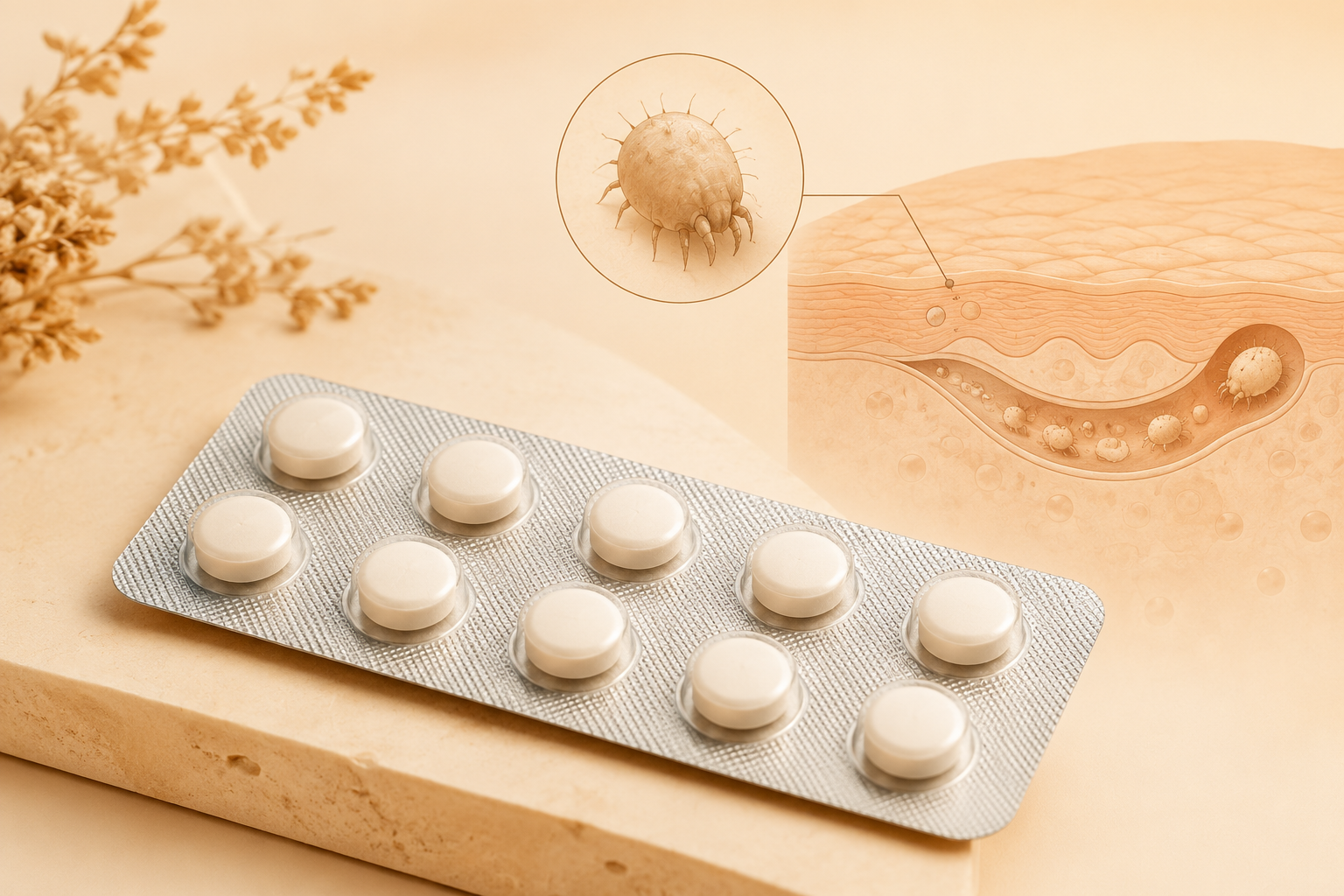
Scabies is a contagious parasitic skin infestation caused by the microscopic mite Sarcoptes scabiei var. hominis. These mites burrow into the upper layers of the skin, where they live, feed, and lay eggs. The condition is common worldwide and affects individuals of all ages and socioeconomic backgrounds. Although highly uncomfortable, scabies is treatable with appropriate antiparasitic therapy and environmental hygiene measures.

The life cycle of the mite includes four stages: egg, larva, nymph, and adult. After the female mite burrows into the skin, she lays eggs that hatch within several days. The larvae then migrate to the skin surface, mature into nymphs, and eventually become adults capable of continuing the cycle. This ongoing reproduction explains why symptoms can persist and why treatment often targets multiple life‑cycle stages.

Symptoms typically include intense itching—especially at night—along with small papules, burrows, or rash‑like lesions. Commonly affected areas include the wrists, fingers, waistline, elbows, and genital region. In severe forms such as crusted scabies, thick hyperkeratotic plaques may develop, containing thousands of mites.

Transmission occurs primarily through prolonged skin‑to‑skin contact, making scabies common in households, care facilities, and crowded environments. Indirect transmission through bedding or clothing is less common but possible, especially in crusted scabies where mite burden is high.

Scabies — Key Characteristics

Parameter Description
Causative organism Sarcoptes scabiei var. hominis (microscopic mite)
Life cycle Egg → larva → nymph → adult; completed within skin layers
Symptoms Intense itching, burrows, papules, rash‑like lesions
Transmission Prolonged skin contact; occasionally via contaminated items

The Role of Ivermectin in Scabies

Ivermectin plays a significant role in the systemic management of scabies due to its ability to target mites located beyond the skin surface. Unlike topical agents, which act only where applied, oral ivermectin distributes through the bloodstream and peripheral tissues, reaching burrows and parasite reservoirs that may be difficult to access externally. More details on systemic formulations are available on Ivermectin oral, while topical formulations are described on Ivermectin topical.

Why Ivermectin Is Effective

Ivermectin is effective against scabies because it selectively binds to glutamate‑gated chloride channels in the mite’s nerve and muscle cells. This leads to paralysis and eventual death of the parasite. Its systemic distribution allows it to reach mites in deeper layers of the skin or in areas where topical penetration is limited. This makes ivermectin particularly valuable in widespread infestations or when topical therapy is impractical.

Systemic Action vs Topical Treatment

Topical ivermectin acts locally and is useful for mild to moderate scabies, especially in individuals who prefer external treatment. Oral ivermectin, by contrast, provides systemic action, reaching mites throughout the body. This distinction is important in severe or crusted scabies, where mite burden is extremely high and topical penetration alone may be insufficient. Systemic therapy also avoids issues of incomplete coverage or missed application areas.

When Oral Ivermectin Is Considered

Clinical references describe oral ivermectin as an option in several informational scenarios: • Crusted scabies, where mite density is high and systemic reach is beneficial. • Widespread or difficult‑to‑treat infestations, especially when topical therapy is impractical. • Institutional outbreaks, where systemic administration may simplify coordinated treatment. • Individuals unable to use topical agents, due to skin conditions or mobility limitations. These scenarios reflect informational patterns rather than individualized recommendations.

Scabies — Key Characteristics of Ivermectin’s Role

Parameter Description
Mechanistic advantage Systemic reach; paralysis of mites via chloride‑channel binding
Systemic vs topical Oral reaches deep tissues; topical acts locally on skin surface
Informational use cases Crusted scabies, widespread infestations, institutional settings
Formulation links See Ivermectin oral and Ivermectin topical pages

Mechanism of Action of Ivermectin in Scabies

The antiparasitic activity of ivermectin in scabies is based on its ability to disrupt the nervous system of the mite Sarcoptes scabiei. Ivermectin selectively binds to glutamate‑gated chloride channels located in the parasite’s nerve and muscle cells. This interaction increases chloride ion influx, causing hyperpolarization and loss of neuromuscular function. Humans do not possess these channels, which explains ivermectin’s strong selectivity. A broader mechanistic overview is available on Ivermectin MOA.

Effect on the Mite Nervous System

By binding to chloride channels, ivermectin interferes with the mite’s ability to transmit nerve impulses. This leads to progressive paralysis, preventing the parasite from feeding, moving, or reproducing. The drug’s systemic distribution allows it to reach mites located in deeper layers of the epidermis, where topical agents may have limited penetration.

Paralysis and Death of the Parasite

The paralysis induced by ivermectin is irreversible for Sarcoptes scabiei. Once immobilized, mites lose their ability to maintain burrows or sustain metabolic activity, leading to death. This mechanism is effective against both adult mites and motile immature stages.

Impact on Eggs and Larvae

Ivermectin has limited direct activity on eggs, as they lack the mature nervous structures required for drug binding. However, by eliminating larvae and adults, ivermectin interrupts the reproductive cycle. Newly hatched larvae are susceptible to systemic drug levels, which is why informational regimens often reference interval‑based patterns to cover multiple life‑cycle stages.

MOA of Oral vs Topical Ivermectin in Scabies

Formulation Mechanistic Features
Oral ivermectin Systemic reach; targets mites in deeper skin layers; effective against larvae
Topical ivermectin Local action on skin surface; limited penetration; minimal effect on eggs

Oral Ivermectin in Scabies

Oral ivermectin is widely referenced in clinical literature as a systemic antiparasitic option for scabies, complementing or substituting topical therapy in specific informational scenarios. It contains the same active ingredient across strengths such as Ivermectin 3 mg, Ivermectin 6 mg, and the branded formulation Stromectol. Its systemic distribution allows it to reach mites located deeper within the epidermis or in areas where topical agents may not penetrate effectively.

Systemic Action

Oral ivermectin circulates through the bloodstream and peripheral tissues, providing whole‑body coverage. This systemic reach is particularly relevant in scabies because Sarcoptes scabiei mites burrow into the stratum corneum, and in severe cases—such as crusted scabies—may be present in extremely high numbers. Systemic therapy ensures exposure even in areas that are difficult to treat with topical formulations.

When Oral Ivermectin Is Used

Clinical references describe oral ivermectin as an option in several informational contexts:

  • Crusted scabies, where mite burden is high and topical penetration is insufficient.
  • Widespread or difficult‑to‑treat infestations, especially when topical therapy is impractical.
  • Institutional outbreaks, where systemic administration simplifies coordinated treatment.
  • Individuals unable to use topical agents due to dermatologic conditions, mobility issues, or limited ability to apply creams thoroughly.

These scenarios reflect informational patterns rather than individualized medical guidance.

Advantages of Oral Ivermectin

  • Systemic distribution, reaching mites in deeper layers of the skin.
  • Ease of administration, especially in institutional or outbreak settings.
  • Reduced reliance on topical coverage, avoiding missed areas or incomplete application.
  • Convenience, particularly with higher‑strength tablets such as 6 mg, which reduce tablet count.

Limitations of Oral Ivermectin

  • Limited direct activity on eggs, requiring interval‑based informational patterns to address newly hatched larvae.
  • May be less suitable for certain populations, depending on safety considerations described in clinical references.
  • Availability varies by region, with 3 mg being the most widely distributed strength globally.
  • Some guidelines still prioritize topical therapy for mild cases due to long‑standing clinical familiarity.

Oral Ivermectin — Key Parameters in Scabies

Parameter Description
Systemic action Reaches mites throughout the body, including deeper epidermal layers
Use cases Crusted scabies, widespread infestations, institutional settings
Advantages Convenience, systemic reach, simplified administration
Limitations Limited egg activity; population‑specific precautions; variable availability

Topical Ivermectin in Scabies

Topical ivermectin is a localized antiparasitic formulation used in informational contexts for managing scabies, particularly mild to moderate cases. It contains the same active ingredient as oral ivermectin but acts exclusively on the skin surface, where Sarcoptes scabiei mites burrow and reproduce. Because it does not rely on systemic absorption, topical ivermectin is valued for its targeted action and favorable tolerability profile. More details on topical formulations are available on Ivermectin topical.

Role of Topical Formulations

Topical ivermectin works by delivering the drug directly to the epidermis, where mites reside. Its mechanism mirrors that of oral ivermectin—binding to glutamate‑gated chloride channels in the parasite’s nervous system—leading to paralysis and death. Topical application is often referenced in informational sources for individuals who prefer external treatment or when systemic therapy is not considered.

Difference from Permethrin

While permethrin is traditionally the most widely referenced topical agent for scabies, topical ivermectin differs in several ways:

  • It uses a different mechanism of action, targeting chloride channels rather than sodium channels.
  • It may be better tolerated in individuals sensitive to synthetic pyrethroids.
  • It does not require the same extensive application coverage as permethrin in some informational descriptions.
  • It may be referenced as an alternative when permethrin is unavailable or poorly tolerated.

When Topical Ivermectin May Be Insufficient

Informational sources note several scenarios where topical ivermectin alone may not be adequate:

  • Crusted scabies, where mite burden is extremely high and deeper layers of skin are affected.
  • Widespread infestations, where systemic reach is beneficial.
  • Incomplete coverage, especially in individuals unable to apply topical agents thoroughly.
  • Institutional outbreaks, where systemic therapy may simplify coordinated management.

Topical Ivermectin — Key Parameters in Scabies

Parameter Description
Role Localized antiparasitic action on the epidermis
Difference from permethrin Alternative mechanism; potential for better tolerability
Limitations Less effective in crusted or widespread scabies; relies on full coverage
Formulation link See Ivermectin topical page

Ivermectin vs Permethrin for Scabies

Ivermectin and permethrin are the two most referenced antiparasitic agents for scabies in clinical literature. Although both target Sarcoptes scabiei, they differ significantly in mechanism, depth of action, convenience, and suitability for specific scenarios. A broader comparison is available on Ivermectin vs Permethrin.

Effectiveness

Both agents are considered effective in informational sources, but their strengths differ:

  • Ivermectin (oral) provides systemic coverage, reaching mites in deeper layers of the epidermis.
  • Permethrin (topical) acts locally and is widely referenced as a first‑line topical option.
  • Ivermectin is often highlighted in informational contexts for crusted scabies and widespread infestations.

Speed of Action

Permethrin acts rapidly on contact, disrupting sodium channels in the mite’s nervous system. Ivermectin’s systemic mechanism may take slightly longer to manifest clinically, but it provides broader reach, especially in high‑burden cases. Both require time for post‑treatment itching to resolve due to inflammatory responses.

Ease of Use

Convenience is a major differentiator:

  • Oral ivermectin is easier to administer, especially in institutional outbreaks or when full topical coverage is difficult.
  • Permethrin requires thorough application to the entire body surface, which may be challenging for some individuals.
  • Ivermectin 6 mg tablets reduce tablet count, while permethrin requires physical application time.

Resistance Cases

Reports of permethrin resistance have increased in some regions, often associated with repeated community exposure. Ivermectin is sometimes referenced as an alternative in such informational scenarios. Resistance to ivermectin is considered less common but is monitored in endemic areas.

When Ivermectin Is Considered

  • Crusted scabies with extremely high mite burden.
  • Widespread or difficult‑to‑treat infestations.
  • Institutional outbreaks requiring coordinated management.
  • Situations where topical therapy is impractical or poorly tolerated.

Ivermectin vs Permethrin — Comparative Characteristics

Parameter Ivermectin Permethrin
Effectiveness Strong systemic action; useful in severe cases Highly effective topical agent for standard scabies
Speed of action Systemic onset; broad tissue reach Rapid topical action on contact
Ease of use Simple oral administration Requires full‑body application
Resistance Less commonly reported Increasing reports in some regions
Informational use cases Crusted, widespread, or difficult‑to‑treat scabies Standard mild to moderate scabies

Informational Administration Patterns for Scabies

This section provides a non‑personalized informational overview of how systemic and topical antiparasitic regimens for scabies are typically described in clinical and guideline‑style literature. These patterns illustrate common structural approaches used to target different stages of the Sarcoptes scabiei life cycle. They are not individualized recommendations and do not replace professional medical evaluation.

Standard Informational Patterns

Reference materials often describe scabies treatment using single‑dose or interval‑based two‑dose patterns. These approaches aim to address both adult mites and newly emerging larvae. Interval spacing is typically designed to align with the parasite’s developmental timeline. Topical agents are applied to the entire skin surface, while systemic agents provide whole‑body distribution, which may be useful in widespread infestations.

Repeat Courses

Informational sources sometimes reference repeat courses when symptoms persist, when environmental exposure remains high, or when multiple household members are affected. These repeated patterns are intended to interrupt ongoing transmission and ensure coverage of mites emerging from eggs, which are less susceptible to many antiparasitic agents. Repeat courses are described as part of structured, population‑level or outbreak‑management frameworks.

Considerations in Severe Forms

In severe or crusted scabies, informational protocols often emphasize the need for multi‑layered approaches, combining systemic and topical strategies. Crusted scabies involves extremely high mite burden and thick hyperkeratotic plaques, which limit penetration of topical agents. For this reason, literature frequently describes staged or combined regimens to improve coverage. Environmental decontamination and coordinated management of close contacts are also highlighted in these contexts.

Typical Informational Regimens — Overview

Pattern Description
Standard schemes Single‑dose or interval‑based patterns targeting multiple life‑cycle stages
Repeat courses Used in persistent cases, high exposure, or multi‑person settings
Severe forms Combined systemic and topical approaches for crusted scabies

Crusted Scabies (Norwegian Scabies)

Crusted scabies, also known as Norwegian scabies, is a severe, highly contagious form of infestation caused by Sarcoptes scabiei var. hominis. Unlike classic scabies, which typically involves a relatively small number of mites, crusted scabies is characterized by extremely high parasite burden, often reaching millions of mites. This leads to thick hyperkeratotic crusts, scaling plaques, and widespread skin involvement. The condition is more common in individuals with weakened immune responses, neurological disorders, or limited ability to sense or respond to itching.

Why Crusted Scabies Requires a Systemic Approach

The hallmark of crusted scabies is massive mite proliferation combined with thickened skin, which significantly reduces the penetration of topical agents. The mites inhabit deep layers of the stratum corneum, and the hyperkeratotic crusts act as a physical barrier. For this reason, informational sources consistently describe crusted scabies as requiring multi‑layered management, combining systemic antiparasitic therapy with topical keratolytics or antiparasitic creams. Environmental decontamination and coordinated treatment of close contacts are also emphasized due to the high transmissibility of this form.

Role of Oral Ivermectin

In clinical literature, oral ivermectin is frequently referenced as a key systemic component in informational approaches to crusted scabies. Its systemic distribution allows it to reach mites located in deeper epidermal layers and areas inaccessible to topical therapy. Because crusted scabies involves extremely high mite density, informational protocols often describe repeated or staged systemic patterns to ensure adequate coverage of adult mites and newly emerging larvae. Oral ivermectin is also noted for its practicality in institutional settings, where coordinated management is essential. These descriptions reflect informational patterns rather than individualized medical recommendations.

Crusted Scabies — Key Informational Characteristics

Parameter Description
Definition Severe form with extremely high mite burden and hyperkeratotic crusts
Systemic need Topicals penetrate poorly; systemic therapy improves coverage
Role of oral ivermectin Systemic reach; often referenced in staged informational patterns

Contraindications and Precautions for Oral Ivermectin

This informational overview summarizes key safety considerations frequently described in clinical literature for oral ivermectin, including general contraindications, population‑specific precautions, and interaction‑related risks. Expanded safety discussions are available on Ivermectin oral — precautions and Ivermectin oral interactions.

General Contraindications

Informational sources commonly list several situations where oral ivermectin may be unsuitable. These include hypersensitivity to ivermectin or other macrocyclic lactones, as well as conditions involving significant hepatic impairment, which may alter drug metabolism. Situations associated with compromised blood–brain barrier integrity are also highlighted, because they may increase the risk of central nervous system exposure. These considerations apply across all oral strengths, including 3 mg, 6 mg, and branded Stromectol.

Special Populations

Certain groups require additional caution in informational frameworks.

  • Individuals with severe systemic illness or frailty, where altered pharmacokinetics may occur.
  • People with hepatic dysfunction, due to ivermectin’s CYP3A4‑dependent metabolism.
  • Regions with high Loa loa microfilarial burden, where Mazzotti‑type reactions may occur.
  • Pregnancy and breastfeeding, where systemic exposure requires careful evaluation in clinical references.

Drug Interaction Considerations

Oral ivermectin is influenced by both metabolic and transporter‑related interactions.

  • CYP3A4 inhibitors (azole antifungals, macrolides, antiretrovirals) may increase systemic exposure.
  • CYP3A4 inducers may reduce drug levels and shorten exposure time.
  • P‑glycoprotein inhibitors can increase tissue penetration, including potential CNS exposure.
  • Alcohol and other CNS‑active substances may enhance overlapping side effects such as dizziness or fatigue.

Oral Ivermectin — Key Precaution Categories

Category Description
General contraindications Hypersensitivity, hepatic impairment, compromised BBB
Special groups Pregnancy, breastfeeding, frail adults, Loa loa endemic regions
Interactions CYP3A4 and P‑gp modulators; alcohol and CNS‑active substances

Side Effects of Ivermectin

This section provides a non‑personalized informational summary of side effects commonly described for ivermectin in clinical literature. These effects apply to oral formulations across strengths and are discussed in more detail on Ivermectin general safety. As always, anyone experiencing concerning symptoms should seek evaluation from a qualified healthcare professional.

Common Side Effects

Informational sources frequently describe several mild and transient reactions. These effects are often related to ivermectin’s pharmacologic activity or the body’s inflammatory response during parasite clearance. Commonly mentioned reactions include:

  • Dizziness or light‑headedness
  • Headache and fatigue
  • Nausea, abdominal discomfort, or diarrhea
  • Mild skin itching or rash

These effects are typically short‑lived and do not differ significantly between strengths such as 3 mg, 6 mg, or branded Stromectol.

Rare Side Effects

Less common reactions appear in clinical literature, usually in individuals with underlying conditions affecting drug metabolism or nervous system sensitivity. Rarely reported effects include:

  • Low blood pressure or rapid heartbeat
  • Confusion, ataxia, or other neurological symptoms
  • Visual disturbances

These events are uncommon and are often associated with impaired hepatic function or compromised blood–brain barrier integrity.

Parasite‑Load–Related Reactions

In infections with high parasite burden, informational sources describe Mazzotti‑type reactions, which are immune responses to rapid parasite death rather than drug toxicity. These may include:

  • Fever and chills
  • Swollen lymph nodes
  • Intense itching or skin inflammation
  • Joint or muscle pain

Such reactions reflect the body’s inflammatory response and are not unique to ivermectin; they may occur with other antiparasitic agents as well.

Ivermectin — Key Side Effect Categories

Category Description
Common effects Dizziness, headache, GI discomfort, mild rash or itching
Rare effects Neurological symptoms, hypotension, tachycardia
Parasite‑load reactions Fever, lymphadenopathy, inflammatory skin responses

Efficacy of Ivermectin in Scabies

Clinical literature consistently describes ivermectin as an effective systemic option for the informational management of scabies. Multiple studies and guideline‑style reviews report high rates of clinical and parasitological response, particularly in settings where topical therapy is difficult to apply or has failed. Ivermectin’s systemic distribution and targeted antiparasitic mechanism underpin its role in both classic and crusted scabies.

Evidence from Clinical Studies

Randomized and observational studies comparing oral ivermectin with standard topical agents generally show comparable overall efficacy in classic scabies, with some variability in speed of symptom relief and need for repeat courses. In crusted scabies, ivermectin is frequently highlighted as a key systemic component in combined regimens, contributing to substantial reductions in mite burden when used alongside topical agents and keratolytics. Outbreak reports in institutional settings also describe successful control when ivermectin is incorporated into coordinated treatment strategies.

Activity Against Different Parasite Stages

Ivermectin is most effective against motile stages of Sarcoptes scabiei—larvae, nymphs, and adult mites—through its action on glutamate‑gated chloride channels in the parasite’s nervous system. Its direct activity on eggs is limited, as these lack fully developed neural targets. For this reason, informational patterns often describe interval‑based administration, allowing newly hatched larvae to be exposed to therapeutic drug levels and thereby interrupting the life cycle over time.

Comparison with Alternative Treatments

Compared with topical permethrin, ivermectin offers the advantage of systemic reach and simplified administration, especially in widespread or crusted scabies and in institutional outbreaks. Permethrin remains widely referenced as a first‑line topical agent for mild to moderate cases, but reports of reduced responsiveness in some regions have increased interest in systemic options. Other alternatives, such as benzyl benzoate or sulfur preparations, are often less convenient or less well tolerated. In this context, ivermectin is frequently positioned as a valuable systemic component in modern informational management frameworks for scabies.

Efficacy of Ivermectin in Scabies — Study Overview

Parameter Description
Clinical response High rates of symptom and mite reduction in classic and crusted scabies
Stage coverage Strong activity against larvae, nymphs, adults; limited direct egg effect
Comparison with permethrin Comparable efficacy; systemic advantage in severe or widespread cases
Outbreak control Frequently used in institutional and high‑burden settings in informational reports

Price and Commercial Information for Oral Ivermectin in Scabies

The commercial landscape for oral ivermectin used in informational scabies management varies significantly depending on formulation, manufacturer, and regional availability. Pricing trends differ between generic oral ivermectin and the branded formulation Stromectol, with generics generally occupying the lower‑cost segment. Broader market overviews are available on Ivermectin price and Stromectol price.

Price of Oral Ivermectin (Generic)

Generic oral ivermectin—typically available in 3 mg and 6 mg strengths—tends to be the most cost‑efficient option. Its price is influenced by the large number of global manufacturers, competitive production, and widespread distribution. In informational contexts, generic ivermectin is often described as the most accessible formulation for population‑level or institutional management due to its affordability and availability.

Price of Stromectol (Brand‑Name Ivermectin)

Stromectol, the originator brand, consistently carries a premium price. This reflects brand recognition, historical regulatory approvals, and more limited manufacturer competition. Stromectol is often several times more expensive than generic equivalents, even though the active ingredient and systemic antiparasitic activity are identical. Its availability varies by region, with some markets stocking only generics.

Key Factors Influencing Cost

Several commercial variables shape the final retail price of oral ivermectin formulations:

  • Manufacturer and production scale
  • Brand vs generic status
  • Regional regulations and import policies
  • Supply chain stability and global demand
  • Strength (3 mg vs 6 mg) and pack size

These factors contribute to notable price differences between markets and between branded and generic products.

Price Ranges for Scabies Treatment

Parameter Description
Generic oral ivermectin Lower‑cost; widely available; competitive pricing
Stromectol Higher price; brand‑name premium; limited manufacturers
Cost factors Manufacturer, region, regulations, supply chain, strength

Ivermectin for Scabies – Frequently Asked Questions

Ivermectin is an oral antiparasitic medication used to treat scabies, especially when topical treatments are ineffective or impractical. It works systemically, reaching mites burrowed deep within the skin. Ivermectin is commonly used in weight‑based dosing regimens and may require repeated doses to eliminate newly hatched mites. It is available in both generic forms and the branded Stromectol version, offering identical active ingredient performance with different manufacturing standards.

Ivermectin works by binding to glutamate‑gated chloride channels in the nerve and muscle cells of scabies mites. This increases chloride ion permeability, causing paralysis and death of the parasite. Because human neurons lack these channels, ivermectin maintains a strong safety margin. Its systemic distribution allows it to reach mites located deeper in the skin, making it an effective option when topical agents cannot fully penetrate affected areas.

Ivermectin is effective for classic scabies and is especially valuable for crusted scabies, where mite burden is extremely high. In crusted scabies, ivermectin is often combined with topical treatments to reduce surface mite load. For standard scabies, ivermectin provides high cure rates when taken according to recommended dosing schedules. Because it does not kill eggs, repeat dosing is typically required to ensure complete eradication.

Permethrin is a topical treatment applied directly to the skin, while ivermectin is an oral systemic therapy. Permethrin is often used as first‑line treatment, but ivermectin is preferred when topical application is difficult, when infestations are severe, or when permethrin fails. Studies show both treatments are effective, and in some cases, they are used together for enhanced results, especially in crusted scabies.

Ivermectin dosing for scabies is typically weight‑based and often involves at least two doses taken several days apart. This schedule helps eliminate mites that hatch after the first dose, since ivermectin does not kill eggs. The exact regimen may vary depending on the severity of infestation, patient weight, and clinical guidelines. Crusted scabies often requires multiple doses combined with topical therapy.

Ivermectin begins working within hours, but symptom relief may take several days. Itching can persist for weeks due to immune reactions, even after mites are eliminated. Improvement in rash and skin irritation typically appears gradually. For crusted scabies, symptom resolution may take longer and often requires combination therapy. Follow‑up evaluation is recommended to confirm treatment success.

Ivermectin is considered safe when used at approved doses. Most side effects are mild and may include dizziness, fatigue, or gastrointestinal discomfort. Individuals with heavy mite burdens may experience stronger reactions due to rapid parasite die‑off. Ivermectin should be used under medical supervision, especially in patients with underlying health conditions or in cases of crusted scabies requiring intensive therapy.

Yes, ivermectin is often combined with topical treatments such as permethrin, particularly in crusted scabies or severe infestations. Oral therapy provides systemic coverage, while topical agents help reduce surface mite load. Combination therapy is commonly recommended when rapid parasite reduction is needed or when topical treatments alone are insufficient. Medical supervision ensures proper timing and dosing of both treatment types.

Stromectol is the branded version of oral ivermectin manufactured by Merck, while generic ivermectin is produced by various manufacturers. Both contain the same active ingredient and are considered therapeutically equivalent. Stromectol may differ in excipients, tablet consistency, and manufacturing standards, but clinical effectiveness for scabies is comparable between brand and generic formulations.

Yes, ivermectin is commonly used when permethrin fails or when patients cannot tolerate topical treatments. Because ivermectin works systemically, it can reach mites that topical agents may not fully eliminate. In cases of treatment resistance or persistent symptoms, clinicians may recommend ivermectin alone or in combination with permethrin to improve outcomes and reduce reinfestation risk.

Ivermectin does not kill scabies eggs. For this reason, repeat dosing is typically required to eliminate mites that hatch after the first treatment. The timing of repeat doses varies depending on clinical guidelines and the severity of infestation. In crusted scabies, multiple doses combined with topical therapy are often necessary to achieve full eradication and prevent recurrence.

Itching may persist for several weeks after treatment, even when ivermectin has successfully eliminated the mites. This is due to ongoing immune reactions to mite debris and skin inflammation. Symptom relief typically improves gradually, and antihistamines or soothing topical agents may help reduce discomfort. Persistent or worsening symptoms may require follow‑up evaluation to rule out reinfestation or treatment failure.

Ivermectin treats active scabies infestations but does not prevent reinfestation. Preventive measures include treating close contacts, washing bedding and clothing, and avoiding skin‑to‑skin contact with infected individuals. In outbreak settings, mass treatment strategies may be used to reduce transmission. Proper hygiene and environmental cleaning are essential to prevent recurrence after successful therapy.

Pricing for ivermectin varies depending on pharmacy, region, and whether the product is branded (Stromectol) or generic. Generic ivermectin is typically more affordable while offering the same therapeutic effect. Dedicated pricing resources provide detailed cost ranges, dosage‑based pricing, and online purchase options. Reviewing these sources helps patients compare costs and choose the most suitable option for scabies treatment.